
I. Overview of Metallic Lanthanum
Metallic lanthanum is the first element in the lanthanide series, with unique physical and chemical properties. In nature, it mainly exists in the form of compounds. As the most abundant rare-earth element in the Earth’s crust, its abundance is approximately 0.00183%.
Metallic lanthanum is a silvery-white, and it has good electrical and thermal conductivity, of which the melting point is 720°C, and the boiling point is 3600°C. It exhibits extremely high chemical reactivity, reacting with oxygen in the air at room temperature to release hydrogen.
It is precisely this chemical reactivity that assigns the diverse application values to lanthanum which can be found extensive applications in high-end fields such as optics and electronics.
II. Safety Operation Guidelines: Hazards and Protections of Metallic Lanthanum
Although lanthanum itself does not have significant biological toxicity, as an active metal, its metallic form presents obvious physical and chemical risks. For example, metallic lanthanum powder or flakes may ignite or explode when exposed to heat, open flames, or oxidants. Contact with moisture can slowly release hydrogen, which might form an explosive mixture in an enclosed space. At the same time, there are also some potential risks to human health. For instance, lanthanum metal dust can irritate the eyes, skin, mucous membranes, and respiratory tract. Compounds such as lanthanum nitrate are toxic to a certain extent. Inhaling its fumes may cause headaches and nausea, and in severe cases, it can be life-threatening.
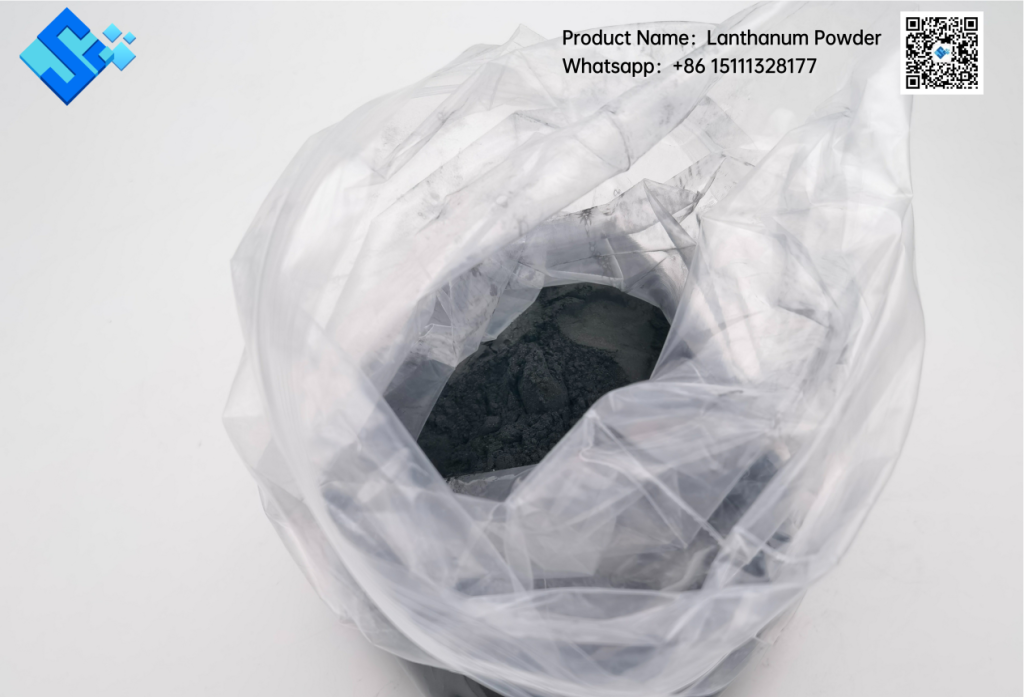
How can one operate while ensuring safety and avoiding safety losses? First, comprehensive protective measures must be taken when handling metallic lanthanum. When dealing with lanthanum powder, a gas mask is required. In high-concentration environments or emergencies, a self-contained breathing apparatus should be equipped. To avoid splashes entering the eyes, chemical safety goggles must be worn. Additionally, rubberized gas-proof clothing or appropriate protective clothing should be worn, and chemical-resistant gloves should be donned. Refer to the work environment, smoking is strictly prohibited at the work site. Good local ventilation should be ensured, and it should be kept away from heat sources, fire sources, and flammable materials.
Furthermore, in the responding to emergencies, such as skin contact, contaminated clothing should be immediately removed, and the affected area should be washed with a large amount of soapy water and clean water. If lanthanum gets into the eyes, they should be rinsed with running water or normal saline for at least 15 minutes, and medical attention should be sought if necessary. In case of a fire, dry sand or a Class D metal fire extinguisher is the specified solution. Water is strictly prohibited for extinguishing the fire to avoid a violent reaction.
III. Comprehensive Review of the Applications of High-Purity Lanthanum
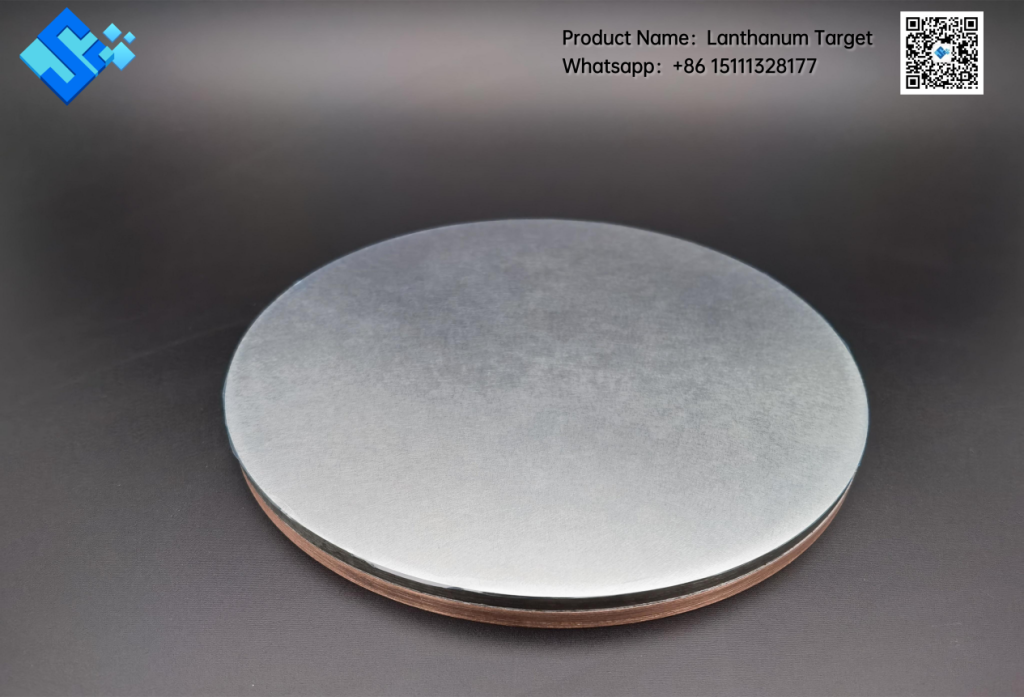
1. Lanthanum has excellent dielectric constant, an ideal high-K gate dielectric material, which is used to increase the dielectric constant of the gate dielectric layer of transistors below 5nm process and reduce the gate leakage current. Currently, our company can produce high-purity lanthanum targets with a purity of ≥3N5, a grain size of ≤100μm, and an oxygen content of <2000ppm as you select.
2.Revolutionary in the Optical Field
High-purity lanthanum oxide (La₂O₃) is a key material in the manufacturing of optical glass, which can increase the refractive index of glass while reducing dispersion, enabling lenses to achieve higher image quality with a thinner profile. This characteristic has led to its wide applications, including the manufacturing of high-end camera and telescope lenses, smartphone camera modules, special optical fibers in fiber-optic communication systems, and prisms in precision optical instruments such as microscopes, etc.
3. Booster of Green Energy Area
The applications of lanthanum in the energy field are expanding rapidly.
Hydrogen storage materials: Lanthanum-nickel alloy (LaNi₅) is an excellent hydrogen storage material that can store up to 400 times its own volume of hydrogen, holding great promise in hydrogen fuel cell vehicles and energy-saving systems.
Automobile batteries: Lanthanum is widely used in the electrode materials of nickel-metal hydride batteries for hybrid and electric vehicles, providing stable charging and discharging performance.
Fuel cells: Working as an efficient electron-emitting cathode material, lanthanum hexaboride (LaB₆) plays a crucial role in new energy conversion devices.
4. Guardian of the Environment and Daily Life
Lanthanum compounds contribute silently to environmental protection and daily life. They are mainly applied in the following areas:
Water treatment: Lanthanum-modified bentonite and lanthanum carbonate can efficiently remove phosphates from water bodies, preventing eutrophication and excessive algae growth and widely applied in swimming pool purification products and lake management.
Medical applications: Lanthanum carbonate is approved as a phosphate binder for the treatment of hyperphosphatemia in patients with renal failure.
Daily necessities: Flints of lighters, high-quality eyeglass lenses, and home theater projection systems also contain lanthanum.
5. Catalyst in Modern Industry
Lanthanide compounds are indispensable as efficient catalysts in multiple industrial processes. Besides, they are used as petroleum cracking catalysts to improve fuel quality and production efficiency, which are also components of automobile exhaust purification catalysts and catalysts for the synthesis of various organic chemical products.
IV. Frontier Applications: Infinite Possibilities of High-Purity Lanthanum
The development of materials science is continuously expanding the application possibilities of high-purity lanthanum. Lanthanum hydride (LaH10) in superconducting materials performs near-room-temperature superconductivity under ultra-high pressure, bringing revolutionary prospects for future energy transmission. Two-dimensional lanthanum fluoride nanomaterials demonstrate excellent performance and stability in new display technologies and quantum devices. Meanwhile, high-temperature and high-pressure research is also underway. The study of the structure of lanthanum under extreme pressures exceeding 230 GPa is opening up new directions in materials science.
发表回复